CARBON SEQUESTRATION
"Measure carbon carefully. Protect the ecosystem first."
Trees remove CO₂ from the atmosphere as they grow and store carbon in biomass and soils. A responsible approach avoids turning a simple planting count into an unsupported carbon claim.
Explore Tree SpeciesTrunks, branches, leaves, and other living vegetation hold carbon accumulated through continuous growth.
Where appropriate, restoration can support nursery work, planting, maintenance, agroforestry, environmental education, and other locally suitable activities.
Leaf litter, fallen wood, and decomposing material form essential additional carbon pools within intact forest ecosystems.
Tree Species & Carbon Connection
Click each tree species below to view its specific carbon sequestration properties, ecosystem role, and climate impact.
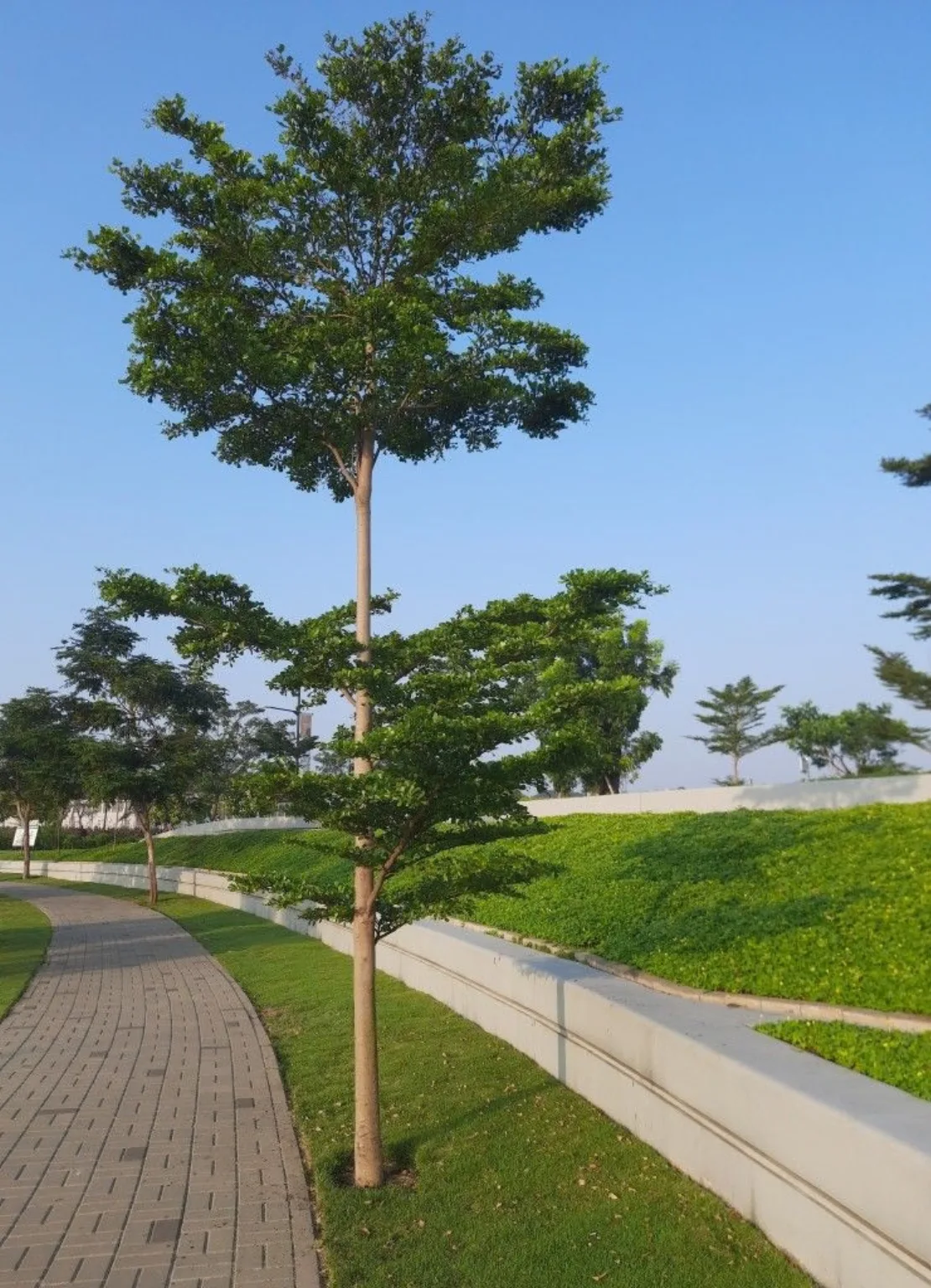
African Talisay (Terminalia catappa / related species)
Known for: Its broad canopy, umbrella-like branches, and large leaves. It accumulates significant carbon in its living wood structure above ground and regularly sheds nutrient-rich leaves.
Carbon Workflow Connection: Connects to Above-ground biomass and Dead organic matter. Because of its fast initial growth in tropical areas, it quickly locks in carbon, but requires monitoring for survival rates as outlined in the Responsible Carbon Workflow.

RESPONSIBLE CARBON WORKFLOW
- Define the project boundary and baseline
- Record planting locations, dates, species, and survival rate
- Measure tree growth and biomass using a recognized method
- Consider soil and other relevant carbon pools where appropriate
- Account for disturbance, mortality, and permanence risks
- Report methods and assumptions transparently
CLIMATE BENEFIT ≠ TREE COUNT
A credible carbon estimate depends on species selection, age, growth rate, survival metrics, biomass density, local site conditions, environmental disturbances, and rigorous accounting methodologies.
Why Is This Important?
Stopping Global Warming
🌡️It prevents the continuous rise of global temperatures that cause severe disasters.
Clean Air
💨It reduces air pollution that directly harms human health.
Ecosystem Protection
🐾It provides safe homes and habitats for animals, birds, and fish.
How Can We Help?
Even in simple ways, you can do something for our environment.
Plant a Tree in your yard or community.
Take Care of the Ocean and do not litter.
Save Electricity to reduce your carbon footprint.
Spread Awareness about climate change.